Russian language is rich with proverbs, idioms, slang and aphorisms, and Russians don’t shy away from employing them! Being a lover of food, and a lover of language, I thought I would put together a handful of my favourite sayings and alternative definitions, all related to the most common Russian foods, so you can nourish your language and get foodie fluent.
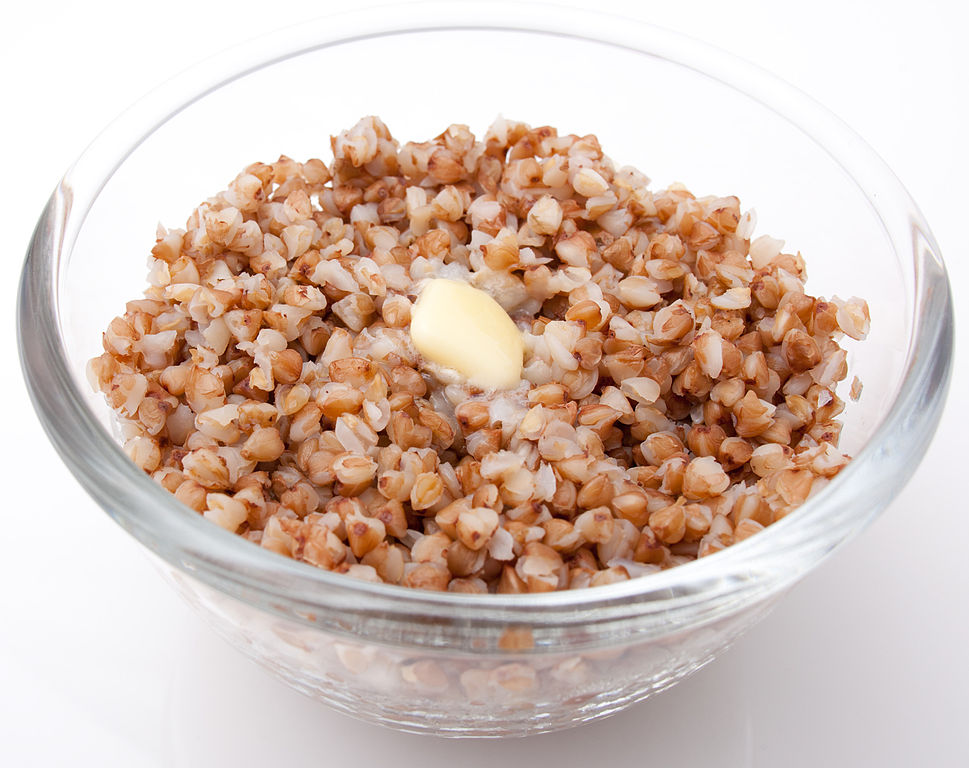
Каша, or porridge, is one of Russia’s most simple and popular foods. It is easy to prepare, cheap, filling and traditional. It is also very varied. Unlike the typical oat-based porridge Brits such as me are used to (in Russian: овсянка), porridge for Russians can be made from a whole range of grains: buckwheat (гречневая каша), rice (рисовая каша), semolina (манная каша), maize (кукурузная каша) and others besides. It is therefore unsurprising that the dish has made its way into a variety of sayings and
“Каша в голове” (lit. porridge in one’s head) is used to talk about someone (or indeed about oneself) that is prone to getting everything muddled up. It indicates that this person has a bit of a chaotic mind or that they are confused. Whether this is due to fatigue, a permanent quality or the result of gorging themselves on porridge is for you to decide.
“Кашу маслом не испортишь” is used to mean that there is no such thing as too much kindness or too much good. Literally meaning, “You won’t ruin porridge with butter”, this idiom is used when someone expresses doubt about excessive goodwill. After all, a good dollop of rich butter in a bowl of hot porridge is hardly going to spoil the meal, and indeed, too much generosity or warmth is not nearly as bad as having none at all.
“Щи да каша – пища наша” means to eat simply. Щи is a traditional and uncomplicated cabbage soup that, along with porridge, is a staple to Russian cuisine. There is nothing wrong with eating simple, hearty, healthy food, and if you moan to your babushka that the Michelin star is amiss at dinner tonight, she may well utter these words as she tosses you your tea.
Bread is another staple in many different cuisines and Russian food does not underestimate the value of bread. Bread is simple and filling, and has often even been used as a political symbol: a people that have bread are a people that do not know hunger. But a lack of means to bake bread has led to many a crisis, an uprising and even to war.
“Хлеб-соль” encapsulates the ideas of hospitality and a warm reception. To welcome someone with “bread and salt” (с хлебом-солью) is to greet with kindness and generosity.
And my final word for today… хрен means “horseradish” and has more than one meaning so be aware… best to stick to “хрен его знает” which means “who the heck knows” or, as we are more wont to say in English, “God knows”. I have little explanation for why the Russian word for horseradish has come to be used in this sort of expression, but its other slang meaning is a little bit naughty and perhaps sounds a bit silly so you’ll have to look that up yourself…
Ellie, currently studying Russian at Liden & Denz Moscow
Finding somewhere affordable to eat in a new city is not always easy. Luckily, Riga…
St. Petersburg isn’t called Russia’s cultural capital for nothing. Not only are there tons of…
Having studied Russian for several years now, I know first hand how difficult it can…
One of my favourite things about Riga is that you never quite know what you…
After spending some time in Riga, I have had the chance to try quite a…
Hello! Today, I would like to share my experience of studying Russian at language schools…